

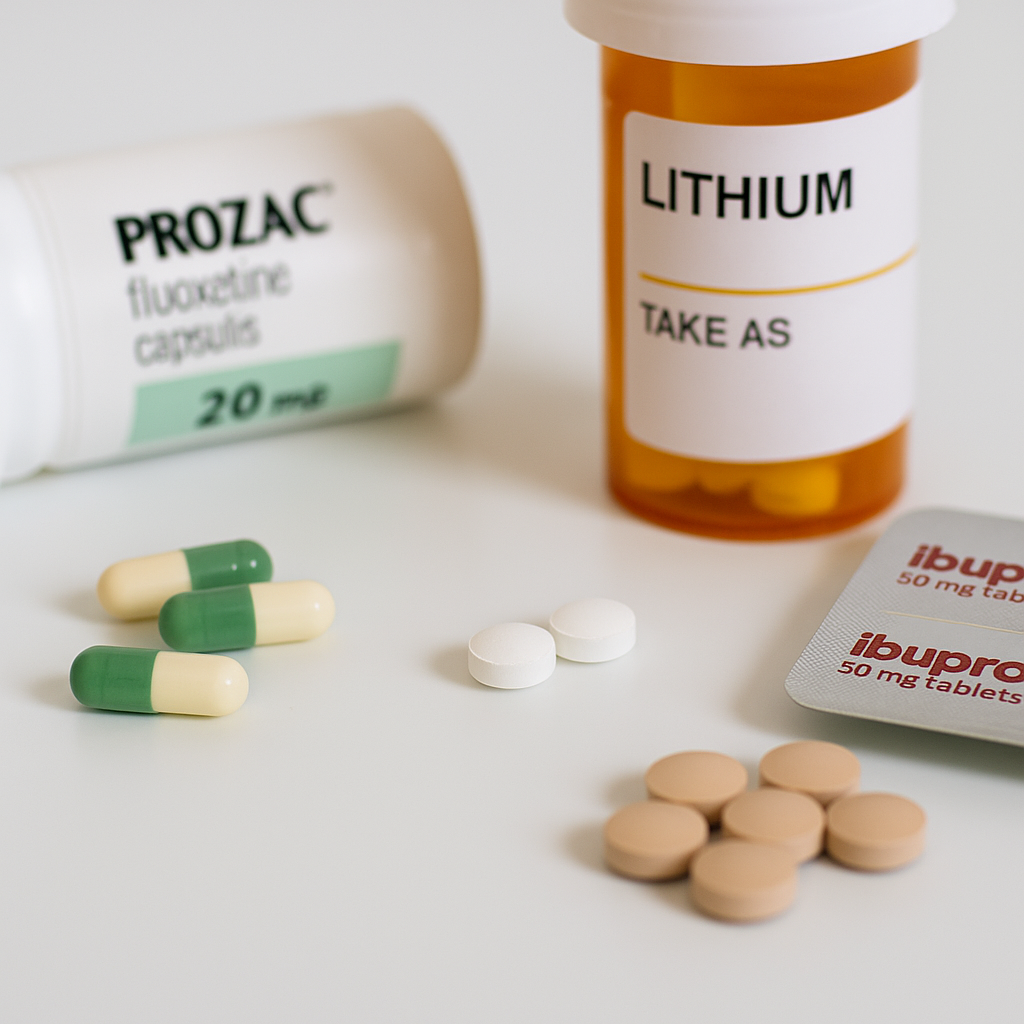
Your patient is taking Prozac and Lithium—what worries you most?
- A. They smoke cigarettes 2 PPD
- B. They are on oral contraceptives
- C. They are on long-term, high-dose ibuprofen
- D. They drink 5 beers per week
Did you get it right?
Why Smoking Isn’t the Biggest Issue
While your patient’s cigarette use should definitely be addressed in treatment, it’s not the primary concern here. What’s more important is tracking changes in smoking habits. That’s because a significant increase or decrease in cigarettes can alter how medications are metabolized (especially antipsychotics). So, answer A is not the most concerning, but it’s something to keep an eye on during follow-ups.
What About Birth Control or Alcohol?
Being on oral contraceptives isn’t an issue here either. There’s no known dangerous interaction between Prozac, Lithium, and birth control. That said, if the patient is, or becomes pregnant, you’ll want to discuss the risks—particularly Ebstein’s anomaly, a congenital heart defect associated with Lithium use during pregnancy. But again, this isn’t the biggest red flag right now.
As for the alcohol? While mixing alcohol and psychotropic meds is never ideal, 5 beers a week isn’t necessarily alarming. Large quantities would be more problematic, but in this case, answer D doesn’t top our list either.
The Real Risk: Lithium and NSAIDs
That leaves us with answer C—and this is where your red flag should go up.
Long-term, high-dose ibuprofen (or any NSAID) can interact dangerously with lithium. Why? Because NSAIDs can reduce renal clearance of lithium, leading to elevated lithium levels and potentially lithium toxicity. Since lithium is primarily excreted by the kidneys, anything that impairs kidney function (like frequent NSAID use) can slow that process down.
Signs of lithium toxicity to watch for:
- Nausea or vomiting
- Tremors
- Confusion
- Ataxia
- Seizures in severe cases
As a PMHNP, it’s critical to assess your patients’ medication regimens in detail—including over-the-counter meds like NSAIDs, which often go unmentioned but can be incredibly important.
Keep Sharpening Your Med Management
If you nailed this Psych Sage question—or even if you didn’t—you’re building valuable medication management skills that help you care for your patients more confidently (and more stress free).
For even more support in diagnosing and treating mental health conditions confidently, check out this free training on stress-free diagnosing and treating mental disorders. In addition, check out this blog post on SSRI half-lives if you want a quick reference to help select the right SSRI for your patient.
You’ve got this—and the more you understand the why behind what you do, the more powerful you become as a provider.
Looking for a deeper dive into lithium pharmacology and toxicity? Take a look at this StatPearls article on lithium for more detail on how it’s metabolized, excreted, and how interactions can impact patient safety.