

If you’re anything like me, one of the most frustrating parts of being a PMHNP is documentation. Psychiatric charting templates can make all the difference. Charting can quickly become the bane of your existence when you’re juggling back-to-back patients, medication management, and administrative duties.
While templates exist, many of them are incomplete or require significant editing to fit the nuanced needs of mental health documentation. That’s why having the right psychiatric charting templates is essential—not only for accuracy, but also for your sanity.
Real-Life Charting Hacks for Busy PMHNPs
Over the years, I’ve developed some charting strategies that have helped cut down my time without sacrificing quality. Here are a few of my favorite tips:
✅ Chart prep at the beginning of your day by coming into work 30 or so minutes early—review past notes, check labs, and anticipate concerns.
✅ Use HPI One-Liners (History of Presenting Illness) like:
“This is a 42-year-old female with hx of MDD and GAD, PMH of hypertension, no past psychiatric hospitalizations or suicide attempts, who presents for medication management follow-up.”
✅ Document risk using a Risk Assessment shorthand template, such as:
“Patient is at low acute risk for suicide as evidenced by denial of suicidal ideation, passion for career as an architect, and close connection to her 2 year old son. Risk is mitigated by her close-knit support system, ongoing medication management, and weekly individual psychotherapy.”
✅ Take 3–4 minutes between patients to finish notes immediately—this keeps you from falling behind.
But even with good habits, documentation can still feel overwhelming.
Get the Tools That Do the Work for You
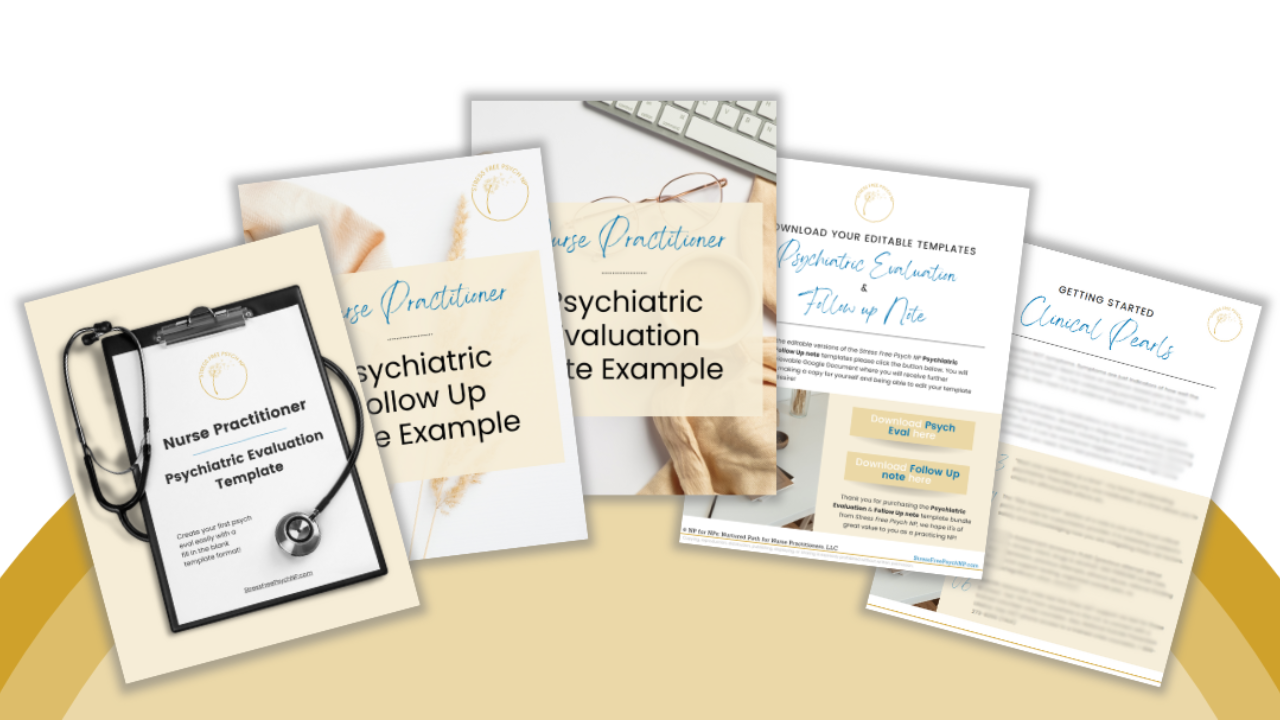
The Psychiatric Templates Bundle was built for busy clinicians like you. Whether you’re a new grad or a seasoned PMHNP, these templates help you write clear, high-quality notes in less time.
What’s Included in the Bundle:
📝 Clinical pearls of psychiatric treatment
📝 Initial psychiatric evaluation template (for adults & children)
📝 Follow-up note template
📝 Example psychiatric evaluation note
📝 Example follow-up note
📝 Editable Google Doc version
These psychiatric charting templates are designed to be thorough but concise, ensuring you document what matters without the fluff.
Over 1,000 psych NPs have purchased the Bundle and one psych NP had this to say about the templates:
“I routinely get positive feedback on my charting and documentation, both from the students I precept and from other providers. Claire’s documentation and charting is always clear and concise but informative”.
— Laurel S., PMHNP
Perfect for New and Experienced PMHNPs
Whether you’re just starting out or you’ve been practicing for years, having a reliable structure to follow can improve both the clarity of your notes and your overall efficiency. Good charting is not just about meeting documentation standards—it’s a form of clinical communication and risk mitigation.
Why It Matters
Clear documentation isn’t just a formality—it’s essential for patient safety, continuity of care, and even legal protection. According to the American Psychiatric Association, effective clinical documentation should include thorough history, rationale for treatment decisions, and follow-up plans. Tools like the Psychiatric Templates Bundle help ensure those standards are met—without taking up your limited time during busy days seeing patients.
Ready to Save Time and Stress?
If you’re ready to make your notes clear, professional, and fast, grab your copy of the Psychiatric Templates Bundle. It’s everything you need to start streamlining your documentation today.
👉 Looking for more ways to strengthen your psych NP workflow? Check out these practice support resources for psych NPs.
