
Every NP has had that moment—questioning their skillset, second-guessing a decision, or feeling like there’s still so much to learn. If that’s where you are now, know this: you’re not alone, and you’re likely growing in ways you don’t even realize.
So, what truly differentiates a good NP from a great NP?
As a psych NP who’s been through “trial by fire” with minimal resources and plenty of self-doubt, I’ve come to learn that becoming a great NP is not about perfection—it’s about how you grow through practice, community, and reflection.
Here are the five qualities that set exceptional nurse practitioners apart.
1. Empathy in Practice
A great NP doesn’t just treat the diagnosis—they see the person behind it. While empathy may sound like a basic requirement in healthcare, truly embodying it is an advanced skill. It means creating space for patients to feel seen, heard, and safe.
Think about the last time you felt deeply listened to. That level of presence? That’s what patients remember. That’s what creates connection and trust—and better outcomes.
2. Continuous Learning
What’s another trait of a great NP? The most exceptional NPs I know are those who remain curious and committed to lifelong learning. Healthcare is constantly evolving, especially in mental health, so being adaptive and learning is key.
Whether it’s listening to a new podcast, enrolling in a continuing education course (like the Mental Disorders Crash Course), staying updated on the latest evidence-based guidelines, or simply asking more questions—staying engaged is what keeps your practice dynamic, effective, and sustainable.
And remember: you don’t need to know everything. You just need to stay open to learning something new every day.
3. Collaboration Is Key

No one shines alone—especially in healthcare.
Great NPs know that teamwork isn’t optional—it’s essential. Whether you’re working closely with your medical assistant, consulting with a therapist, collaborating with another provider, or leaning on your front desk staff—building relationships improves care across the board.
When we value every team member’s contribution, we create better patient outcomes and a healthier workplace culture.
4. Reflection & Self-Care
Early in my career, I burned out—badly. Two years into practice, working with complex patients in a demanding setting, I felt overwhelmed, isolated, and unsure if I was cut out for this work.
But I wasn’t alone. And I wasn’t failing—I just needed more self-compassion and support.
What helped me?
- Writing down small patient “wins” and reading them when I felt overwhelmed
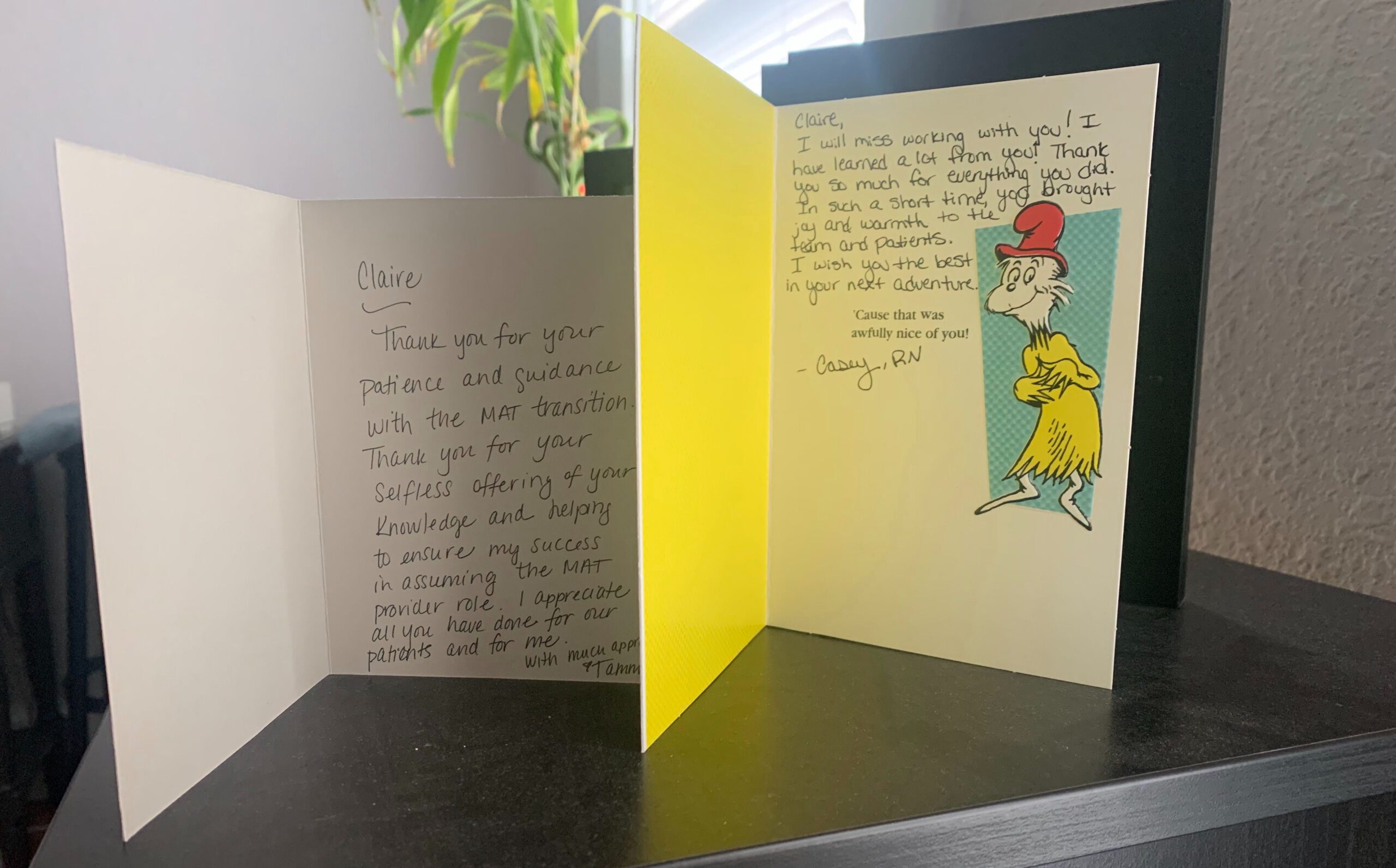
- Keeping thank-you notes from coworkers and patients as reminders of my impact
- Talking to trusted colleagues who could validate my experience
Self-care doesn’t have to look like bubble baths or yoga (though it can). It might mean stepping away for five minutes, saying no to an extra task, or just reminding yourself you’re doing your best.
Here are a few cards I’ve received that I pull out from my desk drawer periodically when I’m having a particularly rough day.
5. Advocacy and Leadership
What’s another trait of a great NP? Great NPs advocate—for patients, for systems, and for themselves.
Maybe it’s ensuring a patient gets connected to a domestic violence shelter. Maybe it’s advocating for full practice authority in your state. Maybe it’s simply delivering outstanding, trauma-informed care every day despite the system’s challenges.
Whatever it looks like for you, your actions represent the value and integrity of the NP profession.
And that? That’s leadership.
You’re Closer Than You Think to Being a Great NP
Being a great NP isn’t about having all the answers—it’s about showing up fully, asking questions, learning constantly, and caring deeply. Every challenge you navigate, every mistake you learn from, every moment of self-reflection—it’s all part of your growth.
You don’t have to do it alone.
👉 Explore resources to support your journey and take the next step toward becoming the NP you were always meant to be.